
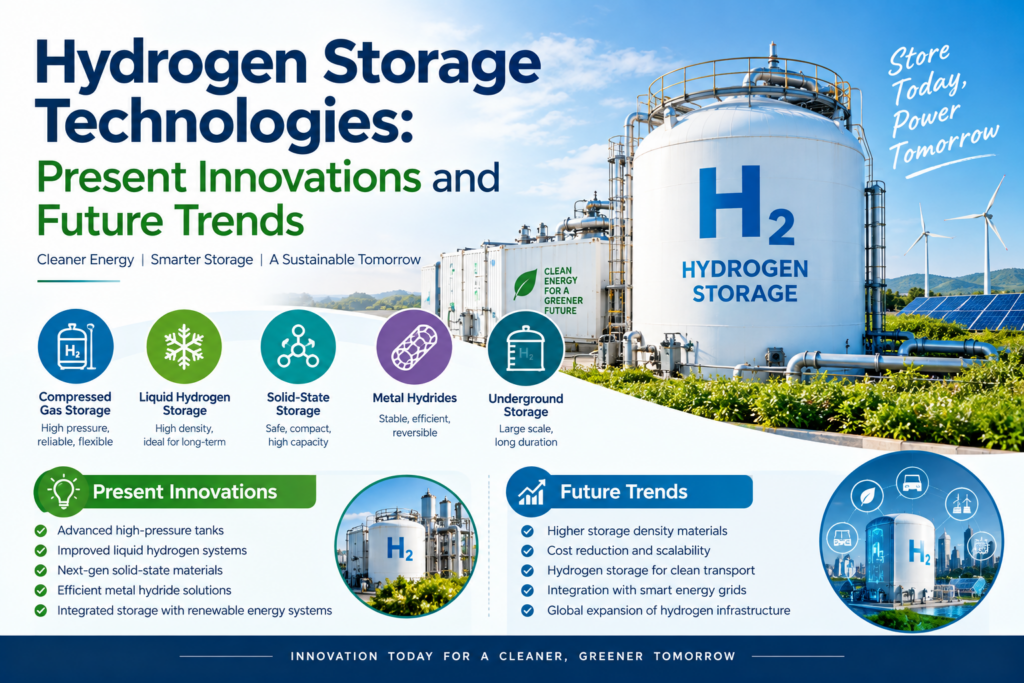
Hydrogen Storage Technologies: Present Innovations and Future Trends
In a world moving toward cleaner and more sustainable energy solutions, hydrogen is emerging as one of the most promising alternative solutions to fossil fuels. Despite rapid advances in hydrogen production, efficient storage is one of the most critical challenges to widespread use. Today’s hydrogen storage technologies are evolving to enable industry, transportation and large scale energy systems.Businesses in London looking for reliable Hydrogen Storage Facilities and Services are increasingly turning to sophisticated storage solutions that offer safety, efficiency and long-term sustainability. With technology continuing to improve, hydrogen storage is becoming more and more practical and affordable. The Importance of Hydrogen Storage Hydrogen is an energy carrier that can be produced from renewable sources and is a key element in the global transition to clean energy. However, the volumetric energy density of hydrogen at ambient conditions is very low compared to conventional fuels. This means that it has to be stored in a special way for transport and industrial use. Efficient storage of hydrogen enables: • Lower carbon emissions• Better integration with renewable energy• Increased supply of fuel for transport• Improved industrial processes As the demand for hydrogen increases, it is necessary to develop advanced storage technologies. Technologies for Hydrogen Storage Today There are a number of storage methods in use today in a variety of industries, each one with its own benefits depending on the use. 1. Hydrogen Storage (Compressed) Compressed gas storage is the most common method in use today. Hydrogen is stored in high-pressure cylinders or tanks, usually at pressures between 350 and 700 bar. Benefits: • Infrastructure widely available• For refueling and transportation stations• Fast filling abilities Challenges:• High pressure requirements• Energy consumption in compression• Huge storage capacity This technology is still one of the preferred options for commercial hydrogen storage facilities. 2. Storage of Liquid Hydrogen Hydrogen can also be stored in liquid form, if cooled to around -253°C. Advantages: • Denser in energy • Applicable for mass transportation • Reduced storage volume However, because it must be kept at cryogenic temperatures with sophisticated insulation and constant energy input, it is more expensive than compressed storage. 3. Metal Hydride Storage Material Metal hydrides store hydrogen in special alloys and release the hydrogen when heated .Key benefits: • High level of safety• Lower pressure at operation• Storage space savingThis technology is particularly attractive for stationary energy storage and for some industrial applications. 4. Hydrogen storage in chemical form Hydrogen can be transported and stored more efficiently using chemical carriers, e.g. ammonia and liquid organic hydrogen carriers (LOHCs).Benefits include: • Transport is easier• Ability to store for long termResearchers continue to improve the conversion efficiency so that this method can compete in the commercial marketplace. 5. Hydrogen Storage Underground Seasonal hydrogen storage in large underground caverns, depleted gas reservoirs and salt formations are increasingly considered. Benefits include the following: • Enormous storage capacity• Reduced operating costs• Balancing of grid scale energy• Renewable Energy Integration SupportThis solution is expected to play a major role in future hydrogen economies. Recent progress in Hydrogen storage Technological innovation is improving hydrogen storage performance in many sectors.Advanced Composite Vessels Modern carbon-fiber composite tanks offer: • Strengthen• Weight reduction• Enhanced durability• Enhanced safetyThey are gaining popularity in hydrogen-powered cars and industrial transportation systems. Storage Based on Nanomaterials Scientists are developing nanomaterials capable of storing more hydrogen in a smaller volume. The most promising materials are: • Carbon nanotubes• Graphene• Metal organic frameworks (MOFs) These technologies could lead to much greater storage efficiencies in the years ahead. Smart Storage Monitoring: Digital technologies now play a key role in managing hydrogen storage.Modern facilities use: • IOT sensors• AI-based monitoring• Leak detection in real time• Predictive maintenance.• Automated pressure controlSuch innovations improve operational efficiency and safety. Better Cryogenic Systems New insulation materials and cooling technologies are reducing the energy losses associated with liquid hydrogen storage, making cryogenic systems more commercially viable. Hydrogen Storage: What to ExpectThe hydrogen industry is expanding rapidly and a number of trends are expected to shape its future. Green Hydrogen Infrastructure Growth Governments and private sector companies continue to invest in green hydrogen production and storage infrastructure. Future facilities will probably include: • Integration of renewable energy• Smart energy management• Cut operational emissions Integrating Renewable Energy Hydrogen storage could be a way to compensate for the intermittent nature of renewable energy sources such as wind and solar. Surplus renewable electricity can be used to produce hydrogen via electrolysis, which can be stored for later use, thus increasing overall energy reliability. Transportation Applications Expansion Hydrogen-powered vehicles continue to gain momentum across the board: • Heavy trucks• Transportation (public)• Training• Transportation by sea• Aeroplane As more people adopt it, the demand for sophisticated hydrogen storage facilities increases. Final thoughts: Clean energy systems and the global transition to net-zero emissions are being enabled by the rapid development of hydrogen storage technologies. Today’s innovations — compressed gas and liquid hydrogen, metal hydrides and underground storage — are making hydrogen safer, more efficient and ever more practical for commercial use. Investment in smart storage systems, advanced materials and renewable energy integration will revolutionize the hydrogen industry in the future. These innovations will help organizations interested in reliable Hydrogen Storage Facilities and Services in London to make storage more scalable, efficient and cost-effective. Hydrogen storage will continue to be a key component of the future clean energy economy as technology keeps advancing and infrastructure continues to develop. Frequently Asked Questions? 1. What is the most popular form of hydrogen storage? A. Currently the most popular method is compressed hydrogen storage, because it is proven, commercially available and suitable for transportation and industrial applications. 2. Importance of Hydrogen Storage A. Hydrogen storage helps to store energy generated by renewable sources safely and use it when needed. This increases energy security and cuts reliance on fossil fuels. 3. What are the recent advances in hydrogen storage? A. Recent developments include carbon fibre composite tanks, storage with nanomaterials, monitoring systems applying AI, smart sensors, advanced cryogenic technologies and underground hydrogen
Hydrogen Storage Technologies: Present Innovations and Future Trends Read More »