

The United Kingdom is in a crossroads in energy history. With the country attempting to strike a delicate balance between the urgent necessity to achieve energy security and the long-term objective of achieving net zero emissions by 2050, there is one organization that will be at the center of this balance: the North Sea Transition Authority (NSTA). The organization, which used to be called the Oil and Gas Authority, has been profoundly rebranded in 2022 to indicate a much more expanded mandate that goes way beyond the conventional hydrocarbon extraction. The NSTA is currently the mastermind behind the offshore energy development in the UK, as it facilitates the removal of the fossil-fuel-based legacy of the past and the introduction of the diversified, low-carbon future.
The Evolving Role of the NSTA
The main activity of the NSTA is to control and direct the oil, gas and carbon storage in the UK Continental Shelf (UKCS). Although its predecessor was more involved in the recovery of petroleum economically in an attempt to maximize its recovery, the recent NSTA is under a reformed approach that incorporates the issue of net zero commitments in each of its decisions. This twin emphasis is the reason why, as the UK relies on its own resources in order to reduce its dependence on the volatile global imports, the resources produced will do so with the least carbon footprint possible.
The authority serves as an intermediary between the high-level governmental policy in climate and the technicalities of offshore activity. With the control of licensing of offshore assets, the NSTA can guarantee that the UK is a desirable location to invest in energy and at the same time face the operators responsible for their environmental performance.
Basic Fundamentals and Supervision of Regulatory Bodies
The North Sea Transition Authority has very extensive and technical responsibilities that span the whole lifecycle of the offshore energy projects.
Licensing and Consenting: The NSTA is the controller of the North Sea. It also regulates the rounds of oil and gas exploration licenses, however, of more significance is the fact that it has introduced the first carbon storage licensing rounds in the UK. This will entail finding the right geological structures- mostly the expired gas fields- to permanently trap the captured carbon dioxide.
Emission Monitoring and Reduction: It is an important attempt to control the emission of greenhouse gasses at offshore production. To curb the flaring and venting, the NSTA has enacted stringent Stewardship Expectations under which operators are expected to minimize flaring and venting. The authority motivates the industry to become more efficient in its operations by being able to track performance by annual emissions reports.
Energy Integration: The NSTA advocates the idea of an integrated North Sea. This implies creating synergies across various energy industries, including electrification of oil and gas platforms by offshore wind or transforming current oil and gas pipelines into hydrogen pipelines. This is the holistic perspective which does not allow the offshore basin to be viewed as a collection of individual projects, but rather as a concerted energy system.
Industry Effect on the UK Energy Industry
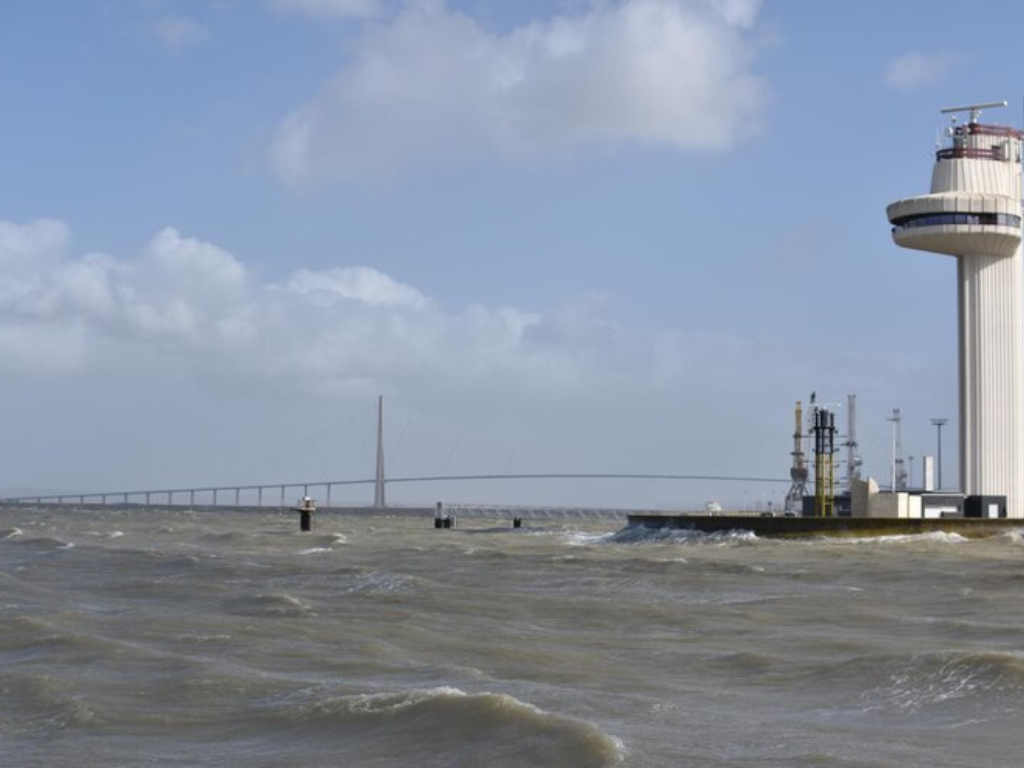
The NSTA influence on the UK energy sector is more than immense especially in the economic stability and technological advancement.
The NSTA offers the certainty that the long-term investors need by ensuring that there is a clear regulatory framework. The NSTA offers a consistent technical background in a time when the financial policy towards the operators of North Sea Transition Authority operators is frequently a matter of political controversy. Its activity guarantees the UK a just transition, which allows saving the high-skill jobs and global supply chains the oil and gas industry created and redirecting them to carbon capture and offshore wind.
Besides, the NSTA emphasis on carbon capture, usage and storage (CCUS) is making the UK a global force on carbon abatement. Storing millions of tonnes of $CO 2 under the sea bed is not merely an environmental requirement but rather a booming industrial sector that the NSTA is currently fostering.
Navigating a Net Zero Future
The activity of the NSTA will only become more acute as the UK approaches 2030 and even later. The authority has a new role that consists of managing natural depletion of oil and gas in the North Sea and hastens the scale-up of hydrogen and carbon storage. Its value is calculated not only in barrels of oil equivalent, but also weighing the gigatonnes of carbon saved and the power of the national grid. North Sea is not a mere source of fuel anymore, it is an invaluable resource in combating climate change, and the NSTA is its main custodian.
About H2Terminals
We are transforming the supply chain of green hydrogen at H2Terminals through decentralizing the production and distribution. Our concept is to use green hydrogen made of wind and wave energy offshore of the North Sea Transition Authority on our offshore energy Islands. We aim to offer affordable and scalable solutions to enable countries to meet their net zero targets.
Frequently Asked Questions
1. What does NSTA stand for?
NSTA is an abbreviation of North Sea Transition Authority. It was previously the Oil and Gas Authority (OGA) and later re-branded in March 2022.
2. Is it a government department?
The NSTA is a private, share limited company owned in its entirety by the Secretary of State of Energy Security and Net Zero. It is an executive non-departmental statutory organization.
3. Is NSTA continuing to license oil and gas?
Indeed, NSTA still regulates the current licences, and manages production to maintain UK energy security, but any new activity should now be consistent with the UK net zero 2050 objectives.
4. What is the North Sea Transition Deal?
It is the historic deal between the government of the United Kingdom and the offshore industry, which is supervised by the NSTA to speed up the energy transition and invest to the tune of 16 billion in low-carbon technologies.
5. What does the NSTA do in the way of Carbon Capture (CCUS)?
The NSTA takes charge of licensing and regulating offshore carbon storage sites, which makes it easy to permanently store CO2 underground to reduce the decarbonization of heavy industry.